
Baolanhao Traditional Tieguanyin First Tester Tea Gift – Nationwide Launch, All 300 Boxes Shipped!
— Why was Baolanhao founded?
— Because we share a common nostalgia for the pure land.
The strength of our homeland comes from an emotion rooted in everyone’s sense of belonging: nature was always within sight, and we ran freely through the mountains. We remember willow catkins and peach blossoms at the Spring Equinox, sunsets after school, and lively smoke curling from behind houses. We deeply love the cinematic language of directors Hou Hsiao-hsien and Jia Zhangke because we resonate profoundly with their familiar and sincere portrayal of life in the spiritual homeland.
The physical characteristics embedded in ethnic identity extend to the community in an extraordinary way, witnessed by the hometown land tightly bound through oral tradition, history, and deep-rooted affection. Octavio Paz affirmed: “We exist because of our bodies, and we feel nostalgia for this body; we also feel nostalgia for the land from which we come and to which we will return after death.”
Kung Fu Tea, represented by Tieguanyin, once accompanied generations of Anxi people overseas, carrying the wanderers’ memories of hometown flavors across the ocean. Brewed repeatedly and inherited across generations, it preserved a timeless traditional taste. It also gained nationwide fame in the 1980s and 1990s, setting an unrivaled standard for “fine tea” among three generations. After its dramatic decline, we now call for the return of traditional Tieguanyin—not only for its unforgettable taste, but also for the nostalgia and revival of the lifestyle of that era.
Through a cup of traditional flavor, we cross time and realize that consumption upgrading and lifestyle progress are, in a sense, a kind of “returning to the roots”. With craftsmanship and devotion, the Baolanhao team spent nearly a thousand days refining their work, and the Tieguanyin series was launched in 2021.

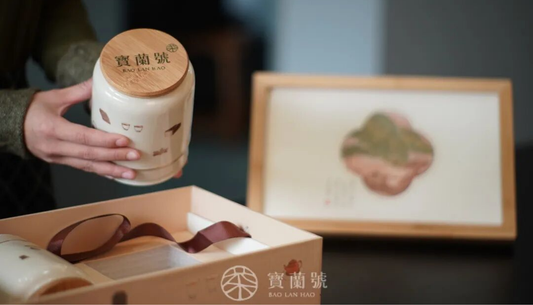
In January 2021, the first batch of Baolanhao Traditional Tieguanyin Taster Gift Sets was officially released nationwide and delivered to 300 connoisseurs. Originally intended for a low-key test before pre-sales, the gift sets received overwhelming praise upon launch. The Baolanhao team sincerely thanks everyone for their support!
The design of the national taster gift set draws inspiration from the Qing Dynasty map of Anxi, redrawn by the Baolanhao team. The latitude and longitude grids are removed, but the shape of “2021” formed by the grids is preserved. Steady calligraphy and lantern imagery express the classic charm of traditional Tieguanyin. The inner bags feature woodcut prints showcasing the beauty of Anxi’s residential buildings and the harmonious life with tea. Each inner bag contains 40g, enough for 5–7 infusions, with concentration and quantity adjustable by the taster.
Note: The trial pack is not stored in aluminum-sealed bags. Please consume promptly after receipt or transfer to a sealed, light-proof container for storage.


Wang Lan, founder of Baolanhao, was born in Yaoshan Village, Xiping Town—the birthplace of Tieguanyin. Her family has been engaged in tea planting, production, and sales for nine generations. Despite over twenty years of business abroad, she has retained her “tea farmer” household registration, an identity she regards as a great honor, even though others urged her to switch to an urban hukou.
When she was born, her grandfather named her after the classic Tieguanyin shape “Wuyuan”. At the age of four or five, she followed her mother to sell tea in Quanzhou. During busy tea seasons, her elder sister worked nonstop with their parents, and the entire village was filled with the sweet fragrance of tea. Like many young people, she left her hometown to pursue a career in her teens—but surprisingly, she chose Pu’er tea instead of Tieguanyin.
At that time, Tieguanyin required professional re-roasting and was not easy to store, often developing a “green reversion” issue. Meanwhile, the Pu’er market was booming: unsold tea did not spoil, but instead appreciated and tasted better with years. With this simple idea, she devoted herself to Pu’er for more than twenty years, rarely returning home. She never imagined that Tieguanyin, once a beloved treasure worth nearly 10,000 RMB per catty in the late 1990s, would suddenly fall from grace.
Xiping, the birthplace and origin of Tieguanyin, suffered from over-exploitation and was later abandoned, now selectively forgotten by the public. Except for the elderly elders on the mountains, young people left to work in cities. The once bustling Anxi tea market became deserted, old tea factories vanished into history, the skills of craftsmen in her family faded, and young people refused to learn the traditional craft.
Regret, heartache, and anxiety welled up. Wang Lan could no longer stay still and began to return to her hometown intentionally to research Tieguanyin. The lively mountains, the lonely mountains, the forgotten mountains—they were her hometown mountains. When we are young, the outside world always seems more wonderful. But as we grow older, we become more attached to the hometown we can return to.


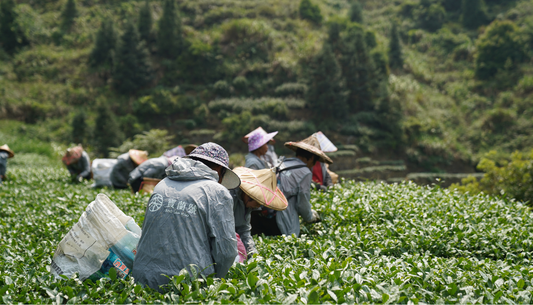
In 2016, she spent months exploring the mountains. Wang Lan discovered that the abandoned Tieguanyin gardens had gradually restored their ecology: covered with lush vegetation, grasses and ferns growing wildly, squirrels, snakes, and birds living peacefully among them. Nature’s healing power is immense; the tea trees had rested and thrived.
Wang Lan took two key actions: first, she held a family meeting to centrally manage scattered family lands, with no fertilizers, no pesticides, only manual weeding, and minimal intervention on the tea trees. Second, she revived traditional craftsmanship based on existing tea samples and vintage teas, restarting the production of two seasonal crops each year to restore the tea-making standards of the 1980s and 1990s. These two efforts alone required enormous energy. She knew a long period of waiting and trial and error lay ahead.

In 2020, the pandemic swept across China, hitting all industries hard. Tieguanyin harvesting became even more difficult, and yields were extremely low. But that year, the veteran tea masters focused wholeheartedly on making tea in the mountains, and finally produced traditional Tieguanyin with elegant shape, sweet taste, rich aroma, and profound charm.

Good news followed one after another. The Tieguanyin passed 64 pesticide residue tests with zero detection, while most marketable products only tested 22 items. Baolanhao’s domestic and international trademark applications and copyrights were successfully approved. A team combining origin base and operation center began to take shape.
Over the past three years, we have received tremendous support. Many lovers of traditional Tieguanyin have waited patiently, understanding and affirming our pursuit of meticulous craftsmanship. Near the end of the year, we completed this year’s re-roasted Tieguanyin, charcoal-roasted by two masters working shifts for twelve consecutive days, conveying the warmth of pure handcraft and presenting a mellow flavor to everyone waiting for Baolanhao.

"Fujian lies by the sea, with eight mountains, one river, and one field." Anxi is located at the source of the Jinjiang River, covering about 3,057 square kilometers, governing 24 towns and 460 villages. With beautiful mountains and clear waters, sound ecology, and a forest coverage rate of about 66%, it enjoys mild climate, abundant rainfall, and perpetual mist, known as a "natural treasure house of premium tea varieties".
Anxi is the core production area of Minnan oolong, and its acidic red soil is perfect for tea growth. The region called "Nei Anxi", bordered by Wulang Mountain to Diehuhu Ridge, consists of 90% mountainous land, with 2,934 peaks over 1,000 meters above sea level, shrouded in clouds and mist. Countless tributaries crisscross the land, winding with the mountains.

Xiping, anciently known as Xipeng, is the birthplace of Tieguanyin. Beside the origin monument, the study of Wang Shirang—the founder of Tieguanyin—has been rebuilt. Legend has it that in the first year of Qianlong’s reign, Wang Shirang from Nanyan, Xiping, discovered the tea tree at his study "Nanxuan", transplanted it to a nursery, and later presented the tea to the imperial court, where it was named "Tieguanyin". Baolanhao’s tea gardens are located on Jianshi Mountain, right above the birthplace, overlooking the streams around Xiping, with rich vegetation and excellent ecological diversity.

This is the 2020 spring tea produced in Jianshi, Yaoshan Village, Xiping, Anxi, Quanzhou, Fujian—the authentic origin of Tieguanyin. Harvested in May 2020, it is purely handmade through more than ten processes, and charcoal-roasted thoroughly for twelve consecutive days at the end of the year, achieving the classic features: "dragonfly heads, toad backs, green leaves with red edges".
Xiping tea withstands roasting perfectly, releasing its true flavor through slow charcoal baking, and presents the elegant orchid fragrance and creamy charm of Tieguanyin in every infusion. The dry tea is dark and glossy, with mild nature, smooth and sweet taste, and long-lasting aroma, bringing a delightful sensory experience. This is the charm of traditional Tieguanyin—unforgettable once tasted.
Clear rivers, bright blue skies, fresh air, and pure land are the true luxuries of today.
Chinese tea is a memory deep in the blood of every Chinese. It is everywhere, closely linked to our attitude toward life. A leaf, a tea garden, a rain, a breeze… all bring comfort, joy, and freedom, reminding us of the harmony between humanity and nature.
Xiping, with the most suitable soil for Tieguanyin, grows the most unforgettable Tieguanyin in the world. Follow us for pre-sale information and brand updates. Let us return to nature, embrace the pure land, and wait patiently for this once-a-year Tieguanyin.